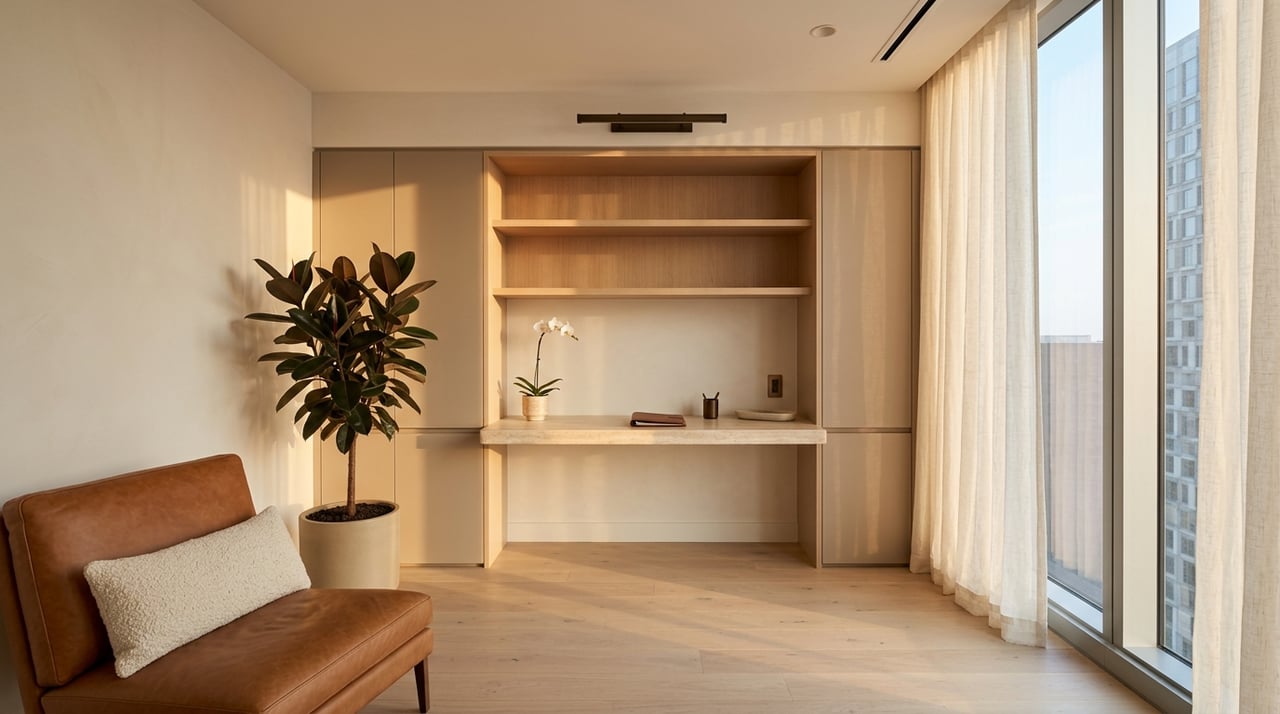
What makes a Financial District apartment feel like a real home instead of a sleek place you pass through? For many buyers, that shift happens when the space starts supporting your daily rhythm, not just your commute. If you are thinking beyond the short term, FiDi offers more depth than its old office-district reputation suggests. This guide will help you think through the apartment, the building, and the neighborhood with a longer horizon in mind. Let’s dive in.
FiDi has changed in meaningful ways
The Financial District sits within Manhattan Community Board 1 alongside Battery Park City, Tribeca, and Seaport/Civic Center. Community Board 1 describes the area as undergoing rapid demographic transformation, which is an important starting point if you are considering a home here for years, not just a season.
That shift is visible in the numbers. Manhattan Community Board 1 reached 78,390 residents in 2020, up 28.6% from 2010, while housing units grew 23% over the same period. The Financial District itself grew to 21,386 residents and accounted for nearly half of the district’s growth.
That kind of population growth changes how a neighborhood functions. It means everyday needs matter more, from parks and public space to building maintenance and nearby services. It also helps explain why more buyers now see FiDi as a place to settle, not simply a place to land.
Long-term living starts inside the apartment
If you plan to stay, your apartment needs to do more than photograph well. In FiDi, many homes sit inside tall buildings with compact layouts, open living areas, and strong architectural lines. Over time, the apartments that wear best are usually the ones that feel calm, organized, and adaptable.
A useful way to think about the transition is this: move from hotel logic to home logic. Instead of optimizing for first impression alone, you begin optimizing for comfort, storage, routine, and emotional ease. That is where design choices start to carry real long-term value.
Create clear daily zones
One of the simplest upgrades is to give each part of your apartment a job. Even in an open plan, you can define areas for sleeping, working, dining, and relaxing through furniture placement, rugs, lighting, and millwork.
This matters because daily life tends to blur in smaller city homes. When your laptop shares space with your dinner table and your living room also functions as an office, the apartment can start to feel restless. Thoughtful zoning helps the home feel intentional.
Invest in storage that disappears
Clutter is one of the fastest ways for a beautiful apartment to feel temporary. Built-ins, better closet systems, and millwork that conceals everyday items can make a major difference in how the space functions over time.
In practice, the goal is not just more storage. It is storage that keeps the visual field quiet. In a glassy tower apartment, that restraint often makes the home feel warmer and more grounded.
Use lighting to soften tower living
Layered lighting is often overlooked in newer buildings. Overhead fixtures alone can make a home feel flat, especially at night when large windows become dark mirrors.
A long-term home benefits from softer layers. Table lamps, floor lamps, dimmable fixtures, and task lighting can make the apartment feel more settled and easier to live in through different parts of the day.
Comfort also depends on air and maintenance
Design is only part of the story. If you are planning to stay in a FiDi apartment long term, indoor comfort and upkeep deserve as much attention as finishes.
The EPA notes that common causes of poor indoor air quality include indoor pollution sources and inadequate ventilation. It also recommends controlling pollution at the source, maintaining adequate ventilation, using filtration when appropriate, and keeping humidity below 60 percent, ideally between 30 and 50 percent.
That guidance is especially relevant when you are renovating, updating finishes, or making a newly purchased apartment your own. Remodeling can create new indoor air issues if it is not handled carefully. For a long-term home, low-emission materials, good airflow, and practical maintenance habits usually matter more than novelty.
New York City’s Lower Manhattan health dashboard also tracks issues such as leaks, cracks, pests, crowding, and heat stress. For you as a buyer, that makes moisture control and responsive building management worth serious attention during your search.
What to look for in practice
When you tour a condo or condop, pay close attention to signs of day-to-day building performance, not just finishes. You are looking for signs that the home can stay comfortable with minimal friction.
A few practical checkpoints include:
- Evidence of good ventilation and airflow
- No visible signs of active leaks or unresolved water damage
- Windows and seals that appear well maintained
- Closet systems or wall space that can support better organization
- A layout that allows for separation between work and rest
Amenities matter differently over time
In a transit-rich neighborhood like FiDi, the best building amenities are often the ones that make everyday life smoother. Grand amenity packages can be appealing at first, but the features that retain value are usually the ones you actually use each week.
The MTA’s Lower Manhattan map shows just how connected the area is, with major nodes including the World Trade Center transportation hub, Fulton Street, Wall Street, Rector Street, South Ferry, and PATH service to New Jersey. NYC Ferry also serves Wall St./Pier 11, the Staten Island Ferry runs around the clock from South Ferry, and Liberty Landing Ferry connects Lower Manhattan with Jersey City.
In that setting, convenience tends to outperform spectacle. The building works best when it supports a life built around walking, commuting, and returning home with ease.
Amenities that tend to age well
If you are choosing with the long term in mind, these are often more useful than high-theater extras:
- Package handling that is efficient and predictable
- Bike storage or well-planned storage rooms
- Quiet lounges for reading or remote work
- Flexible common rooms that support real use
- Outdoor space that is easy to access
- A gym designed for regular use, not just visual impact
- Management and staff that make maintenance feel straightforward
The point is not that luxury amenities do not matter. It is that the right amenities lower daily friction, and that usually creates more lasting value than novelty alone.
The neighborhood works differently now
A long-term home is never just the apartment. It is also the network you use around it. In FiDi, that network has become broader and more resident-focused over time.
Community Board 1’s services page shows a local civic fabric that includes the Downtown Alliance business improvement district south of Chambers Street, along with resident associations, civic groups, and senior services. This is a useful reminder that the neighborhood is supported by institutions people use in everyday life, not just office towers.
That matters because neighborhoods become more livable when you can rely on them on foot. The more your routines connect to nearby public space, services, and community infrastructure, the more a home starts to feel rooted.
Waterfront life supports daily rhythm
Lower Manhattan’s open-space network is one of the strongest arguments for staying long term. New York City’s health reporting notes that the design and condition of buildings, streets, public transportation, and parks influence physical activity, which helps explain why public space matters beyond aesthetics.
Community Board 1 identifies The Battery Conservancy and describes The Battery as a 25-acre public park. The City’s June 2026 Battery Coastal Resilience announcement also notes that phase one is complete, rebuilding and elevating part of the wharf promenade with added protection, accessibility, seating, lighting, and gardens.
For you as a buyer, that means waterfront living here is not only scenic. It can also support a more grounded daily pattern built around walking, air, and public space.
Climate resilience belongs in the conversation
The waterfront is part of FiDi’s appeal, but it also requires realism. If you are buying for the long term, resilience should sit alongside layout, design, and amenities in your decision-making.
The Lower Manhattan Climate Resilience Study says that by 2050, 37 percent of properties in Lower Manhattan are projected to be at risk from storm surge. By 2100, nearly 50 percent could be at risk, with 20 percent of streets exposed to daily tidal inundation under higher sea-level scenarios.
At the same time, the City has advanced a layered resilience program, including the $7 billion Financial District and Seaport Climate Resilience Master Plan. That plan covers nearly one mile of waterfront from The Battery to the Brooklyn Bridge and includes flood protection, resilient ferry terminals, and new public open space.
This is not a reason to dismiss the neighborhood. It is a reason to evaluate it with clarity. In many cases, resilience planning is becoming part of the neighborhood’s long-term value story.
Questions to ask before you buy
When you are comparing buildings near the waterfront or in low-lying parts of Lower Manhattan, consider asking about:
- Building flood mitigation measures
- Placement of mechanical systems
- Building elevation and vulnerable entry points
- Recent capital work related to resilience
- Insurance considerations tied to location and building design
These questions help you move past surface appeal and understand how the building may perform over time.
Think about future flexibility too
Even if your current lifestyle is simple, a long-term home should leave room for change. That may mean a layout that can absorb hybrid work more gracefully, better storage for a growing household, or a building that feels manageable through different life stages.
For buyers planning several years ahead, local context can matter. The New York City Department of Education map places the Financial District in District 2, which is simply a relevant planning detail for those who want a home that can adapt if needs change later.
The broader point is flexibility. The best FiDi homes are often the ones that can evolve with you instead of forcing a move the moment your routines shift.
A more intentional way to buy in FiDi
When a Financial District apartment becomes a long-term home, the change is rarely about one dramatic feature. It usually comes from alignment between the apartment, the building, and the life you actually want to live there.
That means choosing a space that supports calm, prioritizing amenities you will truly use, understanding the neighborhood’s civic and waterfront fabric, and weighing resilience with clear eyes. In a fast-moving market, that kind of thinking can help you buy with more confidence and less compromise.
If you are considering a long-term purchase in Lower Manhattan, a more narrative-led, design-aware search can reveal value that is easy to miss on a standard checklist. To explore that process with discretion and clarity, Christina DiStefano can help you evaluate not just the property, but how it will live over time.
FAQs
What makes a Financial District apartment feel more livable long term?
- The biggest shifts usually come from clear room zones, better storage, layered lighting, good ventilation, and materials that feel warm and durable over time.
Which building amenities matter most in the Financial District?
- In FiDi, the most practical amenities often include package handling, storage, bike rooms, quiet work areas, useful outdoor space, and dependable management.
How does the Financial District function as a neighborhood after work hours?
- The area is supported by a growing residential population, public space, local civic groups, resident services, and strong transit connections that make daily life more convenient.
How should buyers think about climate risk in Lower Manhattan?
- A long-term buyer should consider flood mitigation, mechanical-system placement, building elevation, resilience upgrades, and related insurance questions alongside design and location.
What school district covers the Financial District in Manhattan?
- The New York City Department of Education map places the Financial District in District 2, which can be a useful planning detail for buyers thinking ahead.
