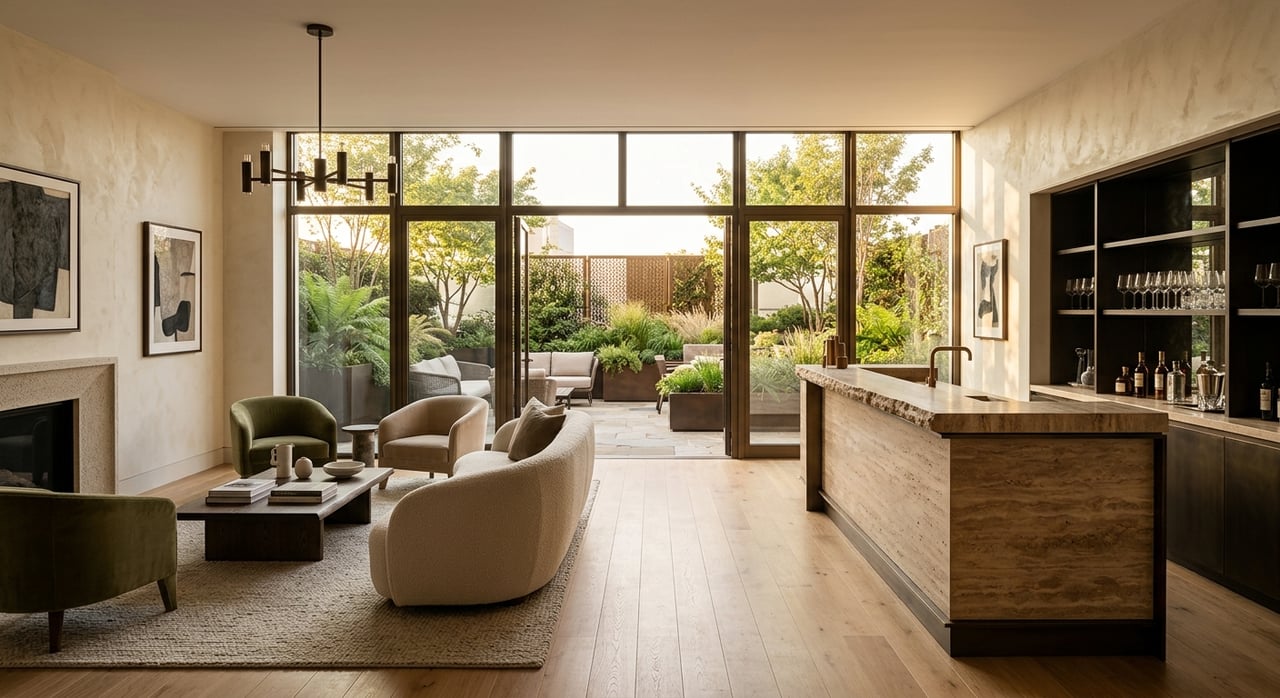
If you think luxury living begins and ends at a doorman, a gym, and a rooftop lounge, Hudson Yards offers a different answer. This part of Manhattan was built to make the neighborhood itself feel like an extension of home, which is a meaningful shift for buyers who care about convenience, service, and daily experience. If you are weighing what makes this district distinct, the real story is how tower amenities and district infrastructure work together. Let’s dive in.
Hudson Yards Changed the Amenity Model
Hudson Yards was planned as a transit-oriented mixed-use district, not as a single standalone tower. According to New York City Planning, the area was designed for commercial, residential, open space, cultural, and entertainment uses, which helps explain why the lifestyle here feels layered rather than siloed.
That distinction matters. In many luxury buildings, amenities stay inside the property line. In Hudson Yards, amenities extend beyond the lobby and into the wider district through public open space, culture, dining, retail, and transit access.
Official Hudson Yards materials describe the completed district as roughly 18 million square feet of commercial and residential space, 14 acres of public open space, about 4,000 residences, a school, The Shed, and the Equinox Hotel. The district opened to the public in March 2019, giving Manhattan buyers a relatively new model for amenity-driven urban living.
District Amenities Shape Daily Life
The most important idea in Hudson Yards is simple: the amenity stack moved from the tower to the district. Residents can access not only building-level services, but also the No. 7 subway, open space, cultural venues, restaurants, shops, and neighborhood programming within a short radius.
That creates less friction in your day. Instead of leaving your building and feeling like you are starting over, you step into a neighborhood designed to support work, wellness, errands, dining, and entertainment in one connected environment.
NYC Planning and Hudson Yards development materials also emphasized infrastructure from the start. The No. 7 subway extension was a major part of the plan, and Hudson Yards Development Corporation noted that the line connects to nearly every other subway line, reinforcing the district’s transit-oriented foundation.
15 Hudson Yards Offers Wellness and Culture
Among the residential towers, 15 Hudson Yards stands out for its relationship to the High Line and The Shed. Official materials describe it as an 88-story tower by Diller Scofidio + Renfro with Rockwell Group, with 285 one- to four-bedroom for-sale residences and 107 affordable rentals.
Its amenity program is extensive and clearly designed around private wellness and entertaining. Residents have access to fitness and aquatic centers, a private spa and beauty bar, a screening room, a golf club lounge, wine storage, pet services, a 24/7 concierge-attended lobby, filtered fresh-air ducts, and Lutron home automation.
The building also includes Skytop, described by Hudson Yards as the neighborhood’s highest outdoor residential space. For buyers who want their home to feel serene but still connected to the larger cultural energy of the district, 15 Hudson Yards captures that balance well.
35 Hudson Yards Leans Into Service
If 15 Hudson Yards is strongly shaped by wellness and culture, 35 Hudson Yards is more explicitly hospitality-driven. Official sources describe it as a 92-story, 1,000-foot limestone tower by David Childs of SOM with interiors by Tony Ingrao, containing 143 two- to six-bedroom for-sale residences.
Its service model is unusually comprehensive. The building includes a full-time concierge and doorman, a Director of Residences who coordinates with the Equinox Hotel, a Lifestyle Director, in-residence dining, spa services, and support for valet, laundry, and transportation.
The amenity offering also supports both private downtime and entertaining. Residents have access to the 60,000-square-foot Equinox fitness club, a golf simulator lounge, library, screening room, private dining areas, a children’s playroom, and a grand terrace and dining room.
Service Density Is the Real Luxury
Amenity-driven living is often described in visual terms, but the more valuable feature is often invisible: time. At 35 Hudson Yards, public materials describe services that include move-in help, telecom and utility setup, private car service, errands, housekeeping, dog walking, reservations, event planning, and even home chefs or bartenders.
That level of service changes what ownership feels like. Instead of managing every detail yourself, you are buying into a system designed to absorb logistics and reduce decision fatigue.
For many buyers, that is the real appeal of Hudson Yards. It is not only about a dramatic skyline view or a polished residents’ lounge. It is about living in a place where support, wellness, and hospitality are built into the rhythm of the week.
The Neighborhood Works Like a Campus
Hudson Yards also stands apart because the residential ecosystem is broader than two condo towers. The official neighborhood “live” page highlights 15 Hudson Yards, 35 Hudson Yards, Coterie Hudson Yards, and The Set, which suggests a more layered living environment with multiple residential formats.
That matters because it reinforces the idea of a residential campus. Instead of a single tower competing on isolated perks, Hudson Yards presents a connected lifestyle environment with homes, hotel services, dining, events, and public programming all feeding into the same experience.
Official neighborhood materials also note access to The Shops & Restaurants, special events, Vessel, Edge, the High Line, Hudson River Park, and The Shed. For a design-minded buyer, this can make the district feel less like a building purchase and more like a fully produced way of living.
Entertaining Looks Different Here
One of the clearest ways Hudson Yards redefined amenities is in how it supports hosting. In many luxury buildings, entertaining depends on one lounge or one reservable room. Here, the options are more varied and more integrated into the district and tower experience.
At 35 Hudson Yards, residents can use private dining, a screening room, a billiards lounge, a golf simulator, and terrace spaces. At 15 Hudson Yards, aquatic and spa facilities plus Skytop expand the kinds of gatherings and personal routines the home can support.
If you host often, this matters. A home in Hudson Yards can function less like a private apartment with add-ons and more like a residence within a club-like ecosystem.
Market Value Is Strong, but Selective
From a market perspective, Hudson Yards continues to command premium pricing. PropertyShark’s 2025 ranking said Hudson Yards remained New York City’s most expensive neighborhood for the seventh consecutive year, with a median sale price of $5.58 million, though that figure was down 22% year over year.
That is an important nuance for buyers and sellers. The district clearly holds a top-tier position in the Manhattan pricing hierarchy, but that does not automatically mean smooth appreciation every year or equal performance across every unit.
Broader Manhattan data from Corcoran’s 2025 reporting also points to an active but selective luxury market. Prices were improving amid growing demand and tighter inventory, while average discounts off last ask were around 3.9% in June 2025, which suggests buyers are still disciplined even at the high end.
Liquidity Depends on the Specific Product
For all its branding power, Hudson Yards is not a simple story of effortless absorption. Public reporting in 2023 noted that about half of the condos at 35 Hudson Yards remained unsold and that more than $1 billion of condos were still left to sell across Hudson Yards residential towers.
That does not erase the district’s appeal. It does, however, underline a point sophisticated buyers already understand: high-amenity product can be less liquid when pricing is aggressive or the buyer pool is narrow.
This is where product fit matters. Buyers who are drawn to service density, wellness infrastructure, and a highly managed lifestyle may see Hudson Yards as uniquely compelling, while buyers seeking a more traditional Manhattan neighborhood feel may weigh the trade-offs differently.
Why Hudson Yards Still Matters Long Term
The long-term case for Hudson Yards goes beyond branding. Official materials state that it was designated Manhattan’s first LEED Gold Neighborhood Development, has WiredScore certification, and launched with a microgrid and co-generation plants described as saving 24,000 metric tons of CO2e annually.
Those details may not be as glamorous as a spa or screening room, but they matter. They show that Hudson Yards was engineered as a durable urban system, with infrastructure, transit, and public realm planning built into the district from the beginning.
The combination of 14 acres of public open space, the No. 7 extension, on-site healthcare for residents and families, and a broad mixed-use plan helps explain why Hudson Yards continues to stand out in Manhattan. It was designed not just to look impressive, but to function at scale.
What This Means for Buyers Today
If you are considering Hudson Yards, the key question is not simply whether the amenities are impressive. The better question is whether this kind of amenity-driven ecosystem matches the way you want to live.
For some buyers, the answer is yes. If you value convenience, wellness, polished service, and a neighborhood that feels highly produced and efficient, Hudson Yards delivers a residential experience that very few Manhattan districts can match.
For others, the decision may come down to alignment. In a market where premium pricing is real but buyer selectivity is equally real, the strongest purchase decisions usually happen when architecture, services, and lifestyle fit are all in sync.
In that sense, Hudson Yards did more than add new towers to the skyline. It redefined luxury living by treating the district itself as part of the home.
If you are evaluating Hudson Yards or another high-amenity Manhattan property, Christina DiStefano offers discreet, design-aware guidance grounded in both market mechanics and lived experience.
FAQs
What makes Hudson Yards different from other luxury Manhattan towers?
- Hudson Yards stands out because the amenities extend beyond individual buildings into the broader district, including transit access, public open space, cultural venues, retail, dining, and neighborhood programming.
What amenities are offered at 15 Hudson Yards?
- Official Hudson Yards materials list fitness and aquatic centers, a private spa and beauty bar, a screening room, a golf club lounge, wine storage, pet services, a 24/7 concierge-attended lobby, filtered fresh-air ducts, Lutron home automation, and Skytop.
What amenities are offered at 35 Hudson Yards?
- Official sources describe amenities including the 60,000-square-foot Equinox fitness club, concierge and doorman service, in-residence dining, spa services, a golf simulator lounge, library, screening room, private dining, a children’s playroom, and a grand terrace.
How does Hudson Yards support daily convenience for residents?
- The district combines building services with neighborhood-scale access to dining, shopping, culture, parks, and the No. 7 subway, while 35 Hudson Yards also advertises support such as move-in help, housekeeping, reservations, errands, and transportation coordination.
Is Hudson Yards still one of the most expensive neighborhoods in New York City?
- Yes. PropertyShark’s 2025 ranking said Hudson Yards remained New York City’s most expensive neighborhood, with a median sale price of $5.58 million.
Is buying in Hudson Yards a simple investment play?
- Not necessarily. The district has strong branding and premium pricing, but public reporting and broader Manhattan data suggest that luxury buyers remain selective, which means unit-specific pricing, product fit, and liquidity still matter.
