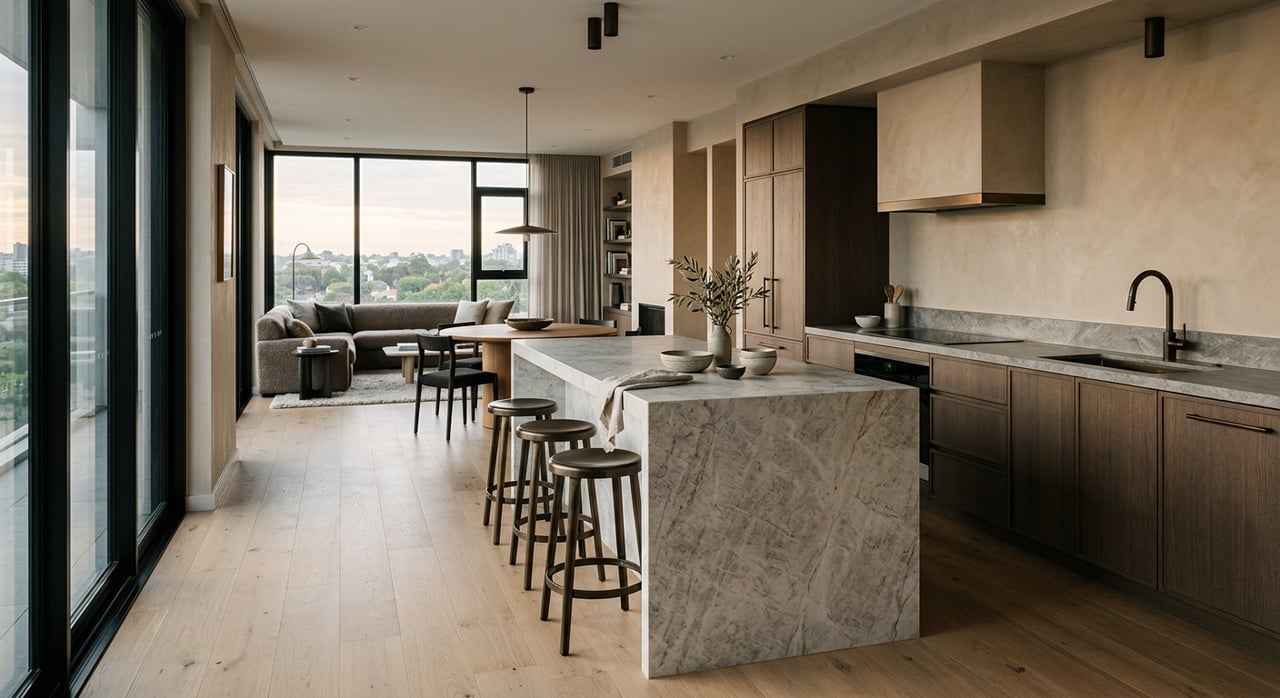
Buying new development in Midtown East can look simple on paper, but it rarely feels that way in real life. You are not just choosing a finishes package or a view. You are deciding how a building, a floor plan, and a daily routine will fit together in one of Manhattan’s most transit-connected and architecturally layered neighborhoods. This guide will help you approach Midtown East new development with more clarity, better questions, and a sharper eye for what matters most in a primary residence. Let’s dive in.
Why Midtown East feels different
Midtown East is not a blank-slate new development district. The area is shaped by the East Midtown rezoning, a 73-block district around Grand Central Terminal created to support modern commercial buildings and fund subway and pedestrian improvements through a district improvement fund.
That planning context matters because it affects how the neighborhood evolves. The rezoning area runs roughly from East 39th to East 57th Streets, between Fifth Avenue and Second Avenue, and the city has noted that older office buildings may become more attractive for residential or hotel conversion if reinvestment slows.
For you as a primary buyer, that means Midtown East offers a mix of old and new rather than a single, uniform housing product. The Landmarks Preservation Commission describes the area as layered across pre-Grand Central, Grand Central and Terminal City, and post-Grand Central eras, which helps explain why new towers, older contextual buildings, and major transit infrastructure all sit side by side.
Transit access shapes daily life
If you plan to live in Midtown East full time, transit is part of the value story. Grand Central Terminal connects Metro-North, the 42 St-Grand Central subway station, and Long Island Rail Road service at Grand Central Madison, which brought LIRR directly to Manhattan’s East Side for the first time.
The surrounding public realm is changing too. In May 2025, the city completed Pershing Square Plaza near Grand Central, describing it as one of the first projects funded by the East Midtown Governing Group.
This is one reason Midtown East appeals to buyers who want a high-functioning home base. The neighborhood is dense, established, and deeply connected, which can make convenience feel less like a bonus and more like part of the core product.
What Midtown East new development looks like now
The current condo product in Midtown East tends to be architect-driven and amenity-rich, but not generic. Buildings often feel distinct in how they present daily life, whether that means wellness, hospitality, work-from-home support, or a more residential scale.
Monogram New York at 135 East 47th Street is a 35-story condominium with 191 residences and current availability ranging from $1,000,000 to $5,500,000. Its studio-to-two-bedroom mix is paired with a broad amenity package that includes private dining, a library, landscaped terraces, rooftop space, a fitness center, yoga and meditation rooms, sauna and steam rooms, co-working and meeting rooms, a media room, pet spa, attended lobby, resident manager services, package room, storage, and bicycle storage.
Selene at 100 East 53rd Street is a 57-floor, 94-unit condominium completed in 2017 by Vanke and Foster + Partners. Its materials describe a contemporary landmark with hospitality-inspired amenities, including a 60-foot sunlit pool sanctuary, as well as doorman service, a gym, package room, and swimming pool.
The Perrie at 234 East 46th Street is currently marketing immediate occupancy and six brand-new model residences, with newly price-adjusted homes starting from $875K according to its legal page. The building emphasizes an indoor-outdoor fitness center, a coworking suite, and a more residentially scaled amenity mix.
Taken together, these examples show an important Midtown East pattern. The decision is often less about finding the newest tower and more about finding the building whose amenity philosophy matches how you actually live.
Start with your daily routine
As a primary buyer, your best filter is not the brochure. It is your routine.
A building can look impressive in marketing and still feel misaligned once you move in. In Midtown East, the most relevant amenity categories often fall into three groups: wellness and recovery, work-from-home support, and service convenience.
If you value structure and recovery, amenities like fitness space, yoga rooms, sauna, steam, or a pool may matter in a very real way. If you work from home often, co-working space, private meeting rooms, and reliable package handling may shape your day more than a dramatic lounge ever will.
Service also deserves close attention. Attended lobbies, resident managers, storage, and package rooms may sound ordinary, but in a primary residence they often have more impact on ease than a long list of splashy extras.
Judge layouts by real life
Square footage alone does not tell you whether a home works. For a primary residence, layout efficiency is often the difference between a home that feels calm and one that feels compromised.
A practical review should focus on room proportions, circulation, window placement, storage, and furniture fit. You want to know whether the apartment can support work, hosting, and quiet time without awkward tradeoffs.
This is especially relevant in Midtown East, where current product often emphasizes proportion, light, and design language. Monogram, for example, markets proportionate layouts and oversized windows, while The Perrie’s legal page notes that layouts, dimensions, and finishes are approximate and may vary by apartment.
That last point is important. If you are buying a primary home, small differences between lines or units can have an outsized effect on your daily experience.
Layout questions worth asking
- Does the living area fit how you actually sit, work, and host?
- Is there enough separation between active and quiet spaces?
- Do windows support the light and mood you want during the day?
- Is storage built into the home, or will you need to solve for it later?
- Can the apartment handle your routine without forcing custom workarounds?
Treat model residences carefully
Model residences can be useful, but they should never be your only reference point. They help you understand flow, scale, and light, yet they can also smooth over line-specific issues.
The New York Attorney General makes this very clear: buyers should not rely on brochures, verbal statements, or architectural renderings. The offering plan is the controlling document, and buyers should inspect the actual apartment and property.
In practice, that means you should compare the model to the exact line you are considering. Ask whether the final apartment has the same window pattern, storage conditions, layout flow, and overall function suggested by the staged residence.
The offering plan matters most
In a New York condo or conversion purchase, the offering plan governs the sponsor’s obligations. According to the Attorney General, ancillary spaces and amenities only have to be delivered if they are specifically promised in the plan.
This is one of the most important rules for a Midtown East buyer. Marketing materials may shape first impressions, but they do not control what the sponsor is required to provide.
You should pay close attention to the section called A Description of Property. This is where you can verify what is actually being promised, including amenity spaces, apartment features, and other material details.
The Attorney General’s database can also be searched by property name, address, sponsor, or principal. It shows filing dates, amendments, sponsor principals, and downloadable documents when available.
How to vet the sponsor and building history
Sponsor reputation is not just about name recognition. For a primary buyer, the real question is whether the building was delivered, or is being marketed, in a way that aligns with the filed plan.
That means checking whether details like unit size, appliance package, amenity count, roof access, storage, and service levels are actually supported by the documents. The Perrie’s legal page offers a good example of the caution buyers should expect, stating that renderings and photographs are illustrative and that purchasers should inspect the actual apartment and property rather than rely on marketing images.
You can also review public building history through the New York City Department of Buildings. DOB BIS and DOB NOW allow you to review permits, complaints, violations, inspections, and occupancy history.
This is especially useful if a building is still being completed or recently delivered. Open issues do not always tell the full story, but they can help you understand whether a project should be treated as straightforward or as something that deserves deeper review.
A practical diligence workflow
- Pull the offering plan and any amendments from the Attorney General database.
- Confirm the sponsor, principals, and filing history.
- Compare the sales narrative with what the plan actually promises.
- Review DOB BIS and DOB NOW for permits, complaints, violations, inspections, and occupancy status.
- If construction is ongoing, treat renderings and model units as directional unless the exact feature appears in the plan.
Midtown East is a selective market
One of the biggest mindset shifts for buyers is understanding that Midtown East is not a neighborhood of endless interchangeable supply. It is better approached as a selective, transit-rich condo market where buildings can differ sharply in feel, service model, and daily usability.
That is why a disciplined, design-aware process matters here. The strongest purchase is often not the one with the loudest amenity story, but the one whose layout, service level, and building program support your life with the least friction.
For a design-minded primary buyer, that kind of fit has value beyond the transaction itself. It can shape how confidently you use the home now and how clearly the property reads to a future buyer later.
A calmer way to buy well
When you narrow Midtown East new development through the lens of daily function, document review, and building credibility, the search tends to become clearer. You stop reacting to surface polish and start identifying the homes that genuinely align with how you want to live.
That is often where the best decisions are made. Not in the flashiest presentation, but in the quiet confidence that the apartment, the building, and the paperwork all support the same story.
If you want a more private, design-conscious approach to buying in Midtown East, Christina DiStefano offers discreet advisory grounded in new-development fluency, lifestyle alignment, and thoughtful decision-making.
FAQs
What makes Midtown East new development different for primary buyers?
- Midtown East combines new towers, older contextual buildings, and major transit infrastructure in one neighborhood, so your decision is often about daily fit and building character as much as finishes or amenities.
What document matters most in a Midtown East condo purchase?
- The offering plan is the controlling document in a New York condo or conversion purchase, and it governs what the sponsor is actually obligated to deliver.
How can you verify a Midtown East sponsor or building history?
- You can review the offering plan and amendments through the New York Attorney General database, then check DOB BIS and DOB NOW for permits, complaints, violations, inspections, and occupancy history.
Why should Midtown East buyers be cautious with model residences?
- Model residences can help you understand flow and scale, but buyers should inspect the actual apartment and property because layouts, finishes, and features may vary by line or unit.
Which amenities matter most in Midtown East for full-time living?
- The most useful amenities are usually the ones that support everyday life, such as wellness spaces, work-from-home areas, attended service, package handling, and storage.
How should you compare Midtown East floor plans as a primary buyer?
- Focus on room proportions, circulation, window placement, storage, and furniture fit so you can judge how the apartment will function in real life rather than relying only on advertised square footage.
