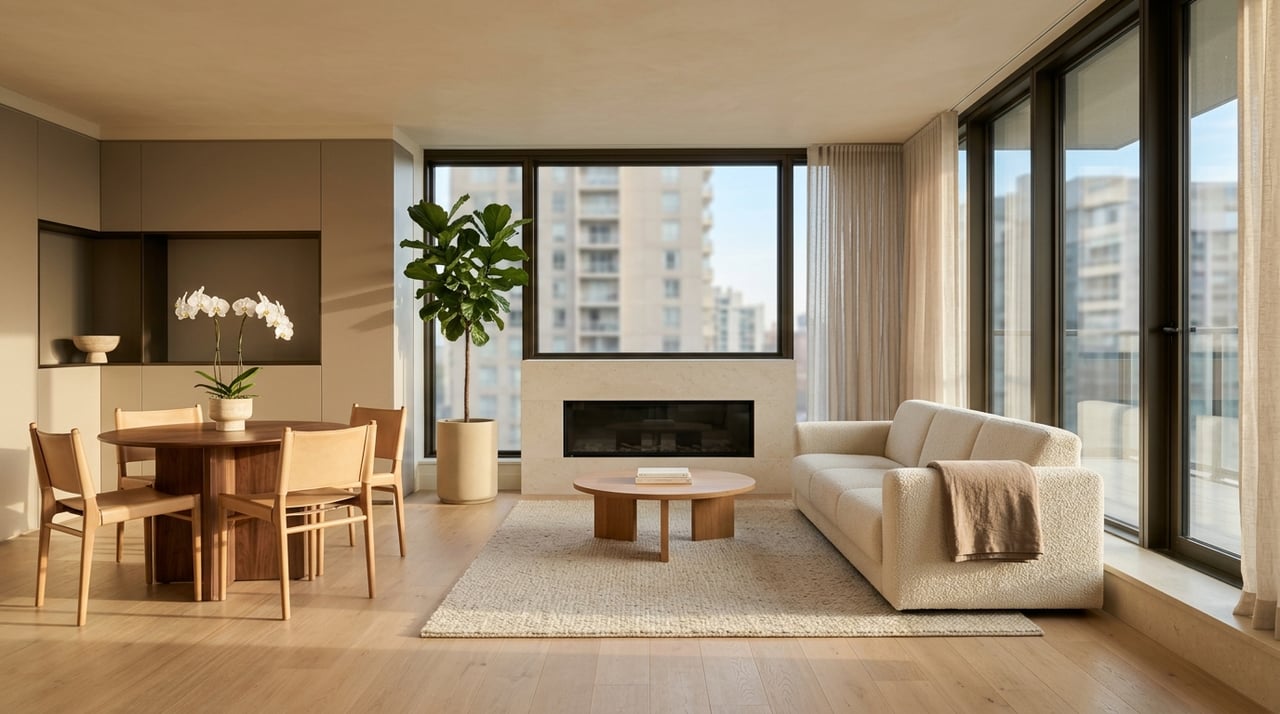
If you are trying to position a Hudson Yards residence for an end-user buyer, the story cannot stop at skyline views or a famous address. Today’s buyer wants a home that supports daily life, reduces friction, and feels aligned with who they are. In Hudson Yards, that case is stronger than many people realize, and when you frame it well, you can move the conversation from prestige to lived value. Let’s dive in.
Hudson Yards Works as a Real Neighborhood
One of the biggest advantages of Hudson Yards is that it is not just a single luxury tower cluster. It functions as a mixed-use district with modern residences, offices, public art, cultural institutions, more than 100 shops and culinary experiences, and 14 acres of public plazas, gardens, and groves. That matters because end-user buyers tend to respond to places that feel complete and usable in everyday life.
The neighborhood’s location also supports that message. Hudson Yards sits between 10th and 12th Avenues from West 30th to West 34th Street, with access to commuter rail, the subway, ferries, the West Side Highway, and the Lincoln Tunnel. The 34 St-Hudson Yards 7 train station is ADA accessible, which reinforces convenience as part of the residential story.
For a buyer who plans to actually live there, ease matters. A home feels more compelling when the surrounding district supports work, movement, culture, and downtime without asking too much of you. That is a much stronger emotional and practical case than simply calling the address iconic.
Why End-User Buyers Respond Here
Buyer research points to a clear pattern. Neighborhood quality ranks as the top factor for many buyers at 59%, followed by convenience to friends and family at 45%, convenient shopping at 30%, design of neighborhood at 26%, entertainment and leisure at 22%, walkability at 21%, and parks and recreation at 20%. Hudson Yards lines up well with those preferences because it combines access, design, culture, retail, and open space in one district.
There is also a strong new-construction advantage. Buyers often value avoiding renovations or plumbing and electrical issues, with 42% citing that as a reason to choose a new home. Another 27% point to the ability to choose and customize design features, while 25% value the amenities of new-home communities.
That research helps explain why Hudson Yards can be positioned as more than a luxury purchase. For the right buyer, it offers a cleaner path to immediate living, with less compromise and less catch-up work. In a premium price environment, that reduction in friction becomes part of the value.
Open Space Changes the Manhattan Equation
Hudson Yards has an unusually strong open-space story for Manhattan. The High Line stretches 1.45 miles and reaches West 34th Street, while Friends of the High Line reports more than 450 public programs and more than 120 artists presented through commissions and other formats. Hudson River Park adds a 550-acre riverfront park system along the west side.
This matters because parks and greenery help a neighborhood feel livable, not just impressive. They give buyers a way to imagine routine: morning walks, outdoor breaks, river views, and time to decompress without leaving the area. That daily-life lens is often what helps an end-user buyer connect emotionally.
JLL’s 2025 consumer survey adds useful context here. It found that 71% of respondents think it is important to live in a healthy city, and 68% say health and wellness is an important factor in where they spend time. In Hudson Yards, the combination of open space, walkability, and wellness-oriented amenities makes that positioning feel credible.
Culture Belongs in the Home Story
The Shed gives Hudson Yards a cultural identity that feels integrated rather than decorative. Its mission is to produce and welcome innovative art and ideas across disciplines through a highly adaptable building for performances, exhibitions, events, and gatherings. For an end-user buyer, that helps the neighborhood feel intellectually and socially alive.
Culture is especially powerful when you present it as part of everyday living. A buyer is not just near a venue. They are in a district where art, events, and public programming are part of the weekly rhythm. That creates a stronger sense of place and identity, which is often what design-minded buyers are actually responding to.
For Christina DiStefano’s audience, this is where narrative matters. The strongest positioning does not treat culture as an amenity bullet. It frames the home as part of a larger lived environment that reflects taste, routine, and personal alignment.
Residences That Support Daily Life
Hudson Yards residences already offer features that fit an end-user narrative. At Fifteen Hudson Yards, homes begin on the 53rd floor and range from two to six bedrooms and roughly 1,500 to 10,000 square feet. Features include wide-plank white-oak flooring, Miele appliances, deep soaking tubs, home automation, Bluetooth keyless entry, key-coded elevators, and customization-oriented audiovisual and climate systems.
That list is important, but the interpretation matters more. Instead of presenting those details as luxury signals alone, it helps to translate them into outcomes: smoother routines, better comfort, easier hosting, and a home environment that feels tailored rather than generic. Buyers do not just purchase finishes. They purchase the experience those finishes create.
At Thirty-Five Hudson Yards, the same principle applies. The 92-story limestone tower includes 143 residences, with two- to six-bedroom homes ranging from about 1,500 to 10,000 square feet, interiors by Tony Ingrao, and a private lobby with full-time concierge and doorman. Those elements support service, privacy, and consistency in day-to-day living.
Amenities Should Be Framed as Outcomes
In a market where current listings at 15 Hudson Yards range from $4.25 million to $22.95 million, and listings at 35 Hudson Yards range from $4.25 million to $27.75 million, price alone demands a thoughtful value story. End-user buyers need help seeing how the home will improve their life, not just elevate their status. That is where outcome-based positioning becomes essential.
At Fifteen Hudson Yards, the amenity package includes a 75-foot high-rise pool, a Wright Fit-designed fitness center, private spa and beauty functions, rooftop gathering spaces, and concierge-style support with in-home conveniences. At Thirty-Five Hudson Yards, the offering includes a 60,000-square-foot Equinox club, resident-only wellness and leisure spaces, hotel services, private dining, a screening room, library, board room, lounge and bar overlooking Vessel, a golf simulator lounge, and in-residence dining.
The most effective way to present these features is to connect them to real life:
- Concierge and hotel-style support can save time.
- Fitness, spa, pool, and wellness spaces can support recovery and routine.
- Private dining, lounges, and screening rooms can make hosting easier.
- Board rooms, libraries, and flexible gathering spaces can support work-life flow.
- In-residence services can reduce daily friction.
That framing is especially persuasive for buyers who value comfort, privacy, and ease. It also fits Christina’s Emotional ROI Method™ because it moves the discussion from inventory to experience.
Scale Needs Translation, Not Just Numbers
National data shows a median purchased home size of 1,900 square feet, with a median of three bedrooms and two full bathrooms. Hudson Yards homes often exceed those benchmarks by a wide margin. That means square footage alone is not enough to make the case.
Instead, larger residences should be described through use. Buyers connect more quickly when they understand how scale improves circulation, separation of spaces, storage, work-from-home flexibility, entertaining, or personal retreat. A residence feels more valuable when you can imagine how it performs in real life.
This is where careful language matters. A foyer becomes a calmer arrival sequence. A den or library becomes a flexible quiet zone. A spacious primary bath becomes part of a restorative routine. Those small shifts in framing can make a large residence feel more human and less abstract.
Personalization Matters More Than Ever
JLL found that personalization expectations are especially strong among 35 to 44 year-olds, with 79% preferring brands that personalize their experience. That insight matters in Hudson Yards because these residences already offer the design clarity and finish quality that can support a more tailored lifestyle message.
For end-user buyers, personalization is not only about selecting finishes. It is about feeling that the home fits the way you actually live. That could mean space for entertaining, a quieter daily routine, a wellness-focused lifestyle, or a home that reflects a more design-conscious identity.
This is one reason Christina DiStefano’s advisory style is well matched to this type of property. The most effective positioning for Hudson Yards buyers is often narrative-led, design-aware, and grounded in how the residence supports long-term emotional and practical value.
How to Position Hudson Yards Correctly
If you are speaking to an end-user buyer, a few themes deserve more attention than the usual luxury talking points.
Lead With Daily Ease
Hudson Yards works best when presented as an urban home base. Transit access, service infrastructure, open space, retail, dining, and cultural programming all help support a smoother day. That makes the neighborhood easier to understand as a primary residence, not just a premium asset.
Show Wellness in Real Terms
Wellness should not be treated as a trend word. In Hudson Yards, it is supported by parks, riverfront access, fitness and spa amenities, and spaces that help buyers recharge. When you connect these features to emotional relief and better routine, the message becomes more believable.
Make Layouts Feel Useful
Large homes need clear, relatable use cases. Focus on how rooms support privacy, work, hosting, recovery, and flow. Buyers are more likely to respond when they can picture themselves living well in the space.
Tie Home to Identity
The strongest buyers in this category are often choosing a life pattern as much as a floor plan. Hudson Yards offers architecture, culture, public space, and service in one setting. That creates an identity-rich environment for buyers who want more than square footage and views.
The Real Opportunity in Hudson Yards
The opportunity is not to make Hudson Yards sound more luxurious than it already is. The opportunity is to make it feel more livable, more specific, and more emotionally relevant to the person who will call it home. When you position these residences around comfort, convenience, wellness, and identity, the value story becomes much more persuasive.
That is especially true at the top of the market. Buyers at this level are not only comparing product. They are comparing how a home will support their time, energy, taste, and daily rhythm. In Hudson Yards, the district itself gives you strong evidence to support that case.
If you are evaluating how to frame a Hudson Yards residence for a design-minded end-user buyer, a more narrative-led strategy can create clarity and reduce hesitation. For a discreet, high-touch perspective grounded in both new-development fluency and lifestyle alignment, connect with Christina DiStefano.
FAQs
What makes Hudson Yards appealing to end-user buyers?
- Hudson Yards offers a mixed-use environment with residences, shops, dining, culture, public space, and strong transportation access, which helps it function as a complete daily-life neighborhood.
How should Hudson Yards amenities be described to buyers?
- The most effective approach is to translate amenities into outcomes such as saved time, easier hosting, stronger wellness routines, and better work-life flexibility.
Why do parks and open space matter in Hudson Yards?
- The High Line and Hudson River Park help the neighborhood feel more livable and wellness-oriented, giving buyers access to greenery, walking routes, and outdoor routine within Manhattan.
What do Hudson Yards residences offer beyond views?
- Residences at 15 and 35 Hudson Yards combine large layouts, premium materials, home technology, service infrastructure, and wellness-focused amenities that support everyday comfort and convenience.
Why is personalization important for Hudson Yards buyers?
- Research shows many consumers prefer personalized experiences, and in Hudson Yards that means framing the residence around how it supports a buyer’s routine, taste, and sense of identity.
How can a large Hudson Yards residence be positioned more effectively?
- Instead of focusing only on square footage, it helps to explain how the layout supports privacy, circulation, hosting, storage, flexible work areas, and restorative living.
