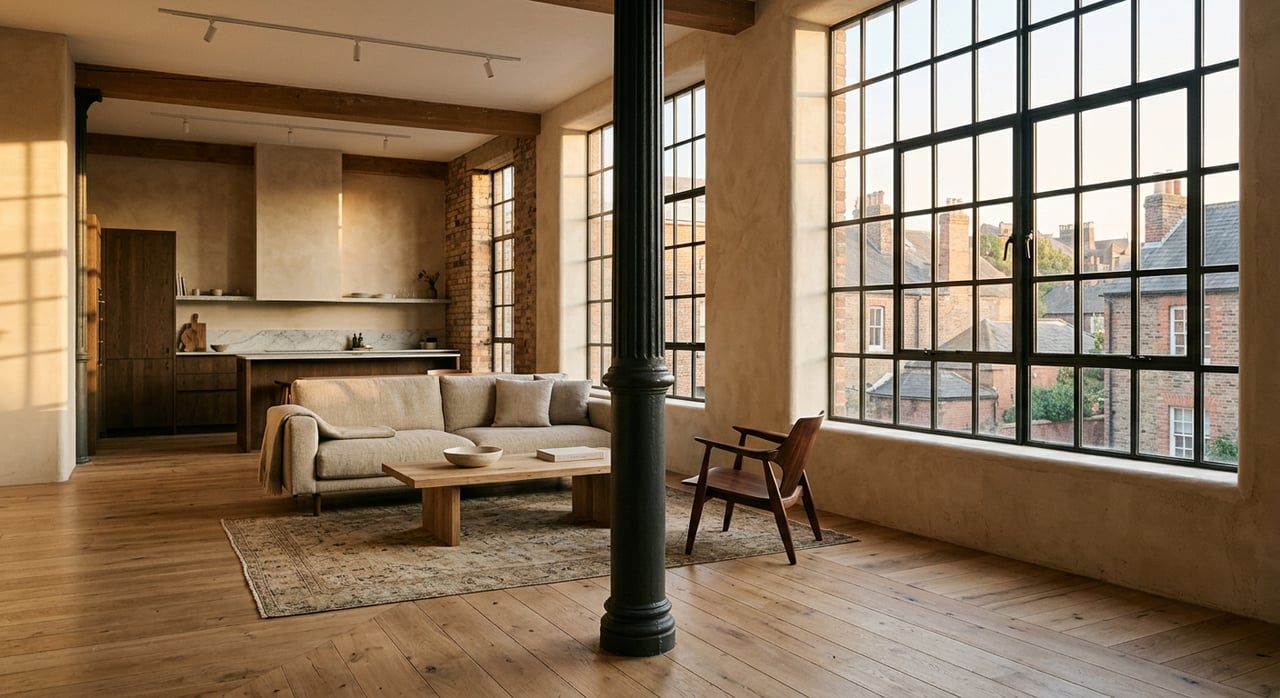
If you are evaluating a Tribeca loft by price per square foot alone, you are probably missing the part that matters most. In this market, two homes can trade in a similar price band and feel completely different once you step inside. The real story often lives in the volume, light, layout efficiency, and building pedigree behind the numbers. Let’s dive in.
Why price per foot falls short in Tribeca
Tribeca is one of downtown Manhattan’s premium markets, but the snapshot changes depending on which metric you use. In March 2026, Redfin reported a median sale price of $3.675 million, a median sale price per square foot of $1.84K, 90 days on market, and 55 homes sold. In the same month, Realtor.com showed 177 homes for sale, a median list price of $4.5 million, a median list price per square foot of $2.3K, and a 95% sale-to-list ratio.
Those figures are not in conflict. They reflect different points in the market cycle, with one focused on closed sales and the other on active listings. If you want to read Tribeca clearly, you need to treat price per foot as a starting screen, not a final answer.
Tribeca lofts were not built like typical apartments
A big reason price per foot can mislead you is that Tribeca’s loft inventory comes from a commercial and industrial past. According to the Landmarks Preservation Commission, many of the area’s 1850s store-and-loft buildings were designed with large open interiors, cast-iron and glass storefronts, and structural columns set in rows across the floorplate. The Department of City Planning also describes Tribeca as a long-standing manufacturing and commercial district.
That history still shapes how these homes live today. A loft may look generous on paper, but columns, bay spacing, and old commercial layouts can change how flexible the space really feels. In Tribeca, square footage is only one part of the experience.
What really drives loft value
Ceiling height changes the experience
In Tribeca, buyers are often paying for volume as much as for area. Current listings repeatedly highlight ceiling height as a major selling point. At 55 Walker Street #4A, the listing calls out 11.5-foot ceilings and a 34-foot living room, while 195 Hudson Street #6A emphasizes 12-foot ceilings and expansive open rooms.
That makes sense in a loft market. Higher ceilings can make the same footprint feel calmer, brighter, and more architecturally significant. When you compare homes with similar square footage, vertical space can be one of the biggest reasons one loft commands more attention than another.
Column grids affect usable space
Not all open lofts function the same way. The same structural systems that gave Tribeca buildings their industrial character also created column grids, piers, bays, and service patterns that were designed for commercial use, not modern residential planning.
That is why layout efficiency matters so much here. A floorplan with well-placed columns can feel elegant and easy to furnish, while a similar-sized loft with awkward interruptions may lose value in the way you actually live in it. In practical terms, the more usable the floorplate, the more persuasive the pricing can be.
Light is a value driver
Light is not a minor feature in Tribeca. It is one of the clearest pricing signals in the market. Listings throughout the neighborhood call out exposures and window count in detail, from 28 Laight Street #6AB with 14 oversized southern and eastern windows to 66 Leonard Street #12D with nine south- and east-facing windows.
Directional light changes everything in a loft. It affects mood, daily livability, and how well an open plan performs across different zones. When a buyer pays a premium for a Tribeca loft, they are often paying for the way light defines the space hour by hour.
Building pedigree shapes buyer perception
Tribeca’s housing stock spans multiple eras, and provenance matters. You can find warehouse buildings from 1887 and 1888 converted to residential use, late 19th-century loft buildings like 395 Broadway, and later residential conversions such as 100 Barclay, a 1927 Ralph Walker Art Deco skyscraper reimagined in 2015.
Each type of building offers a different value proposition. Some buyers are drawn to original loft character and historic facades, while others prioritize a more recent conversion with full-service amenities. The story of the building, and how that story connects to design and lifestyle, can influence value as much as raw size.
Renovation quality creates a second pricing layer
In Tribeca, finish level can meaningfully reprice the same basic shell. One listing may be positioned as turnkey, with custom cabinetry, stone countertops, premium appliances, and built-ins. Another may be marketed for its bones, with the appeal centered on future transformation.
That distinction matters. If two lofts have comparable light, ceiling height, and building character, the quality of the renovation often becomes the next major separator. Buyers are not just pricing what exists today. They are also pricing the cost, effort, and uncertainty of what still needs to happen.
Landmark status can affect cost and timing
Tribeca is not a single uniform landmark environment. The neighborhood includes separate West, North, South, East, and South Extension historic districts, and the streetscape can change block by block. That means preservation context may vary more than many buyers expect.
In these historic districts, most exterior changes to front and rear facades require review by the Landmarks Preservation Commission, and permits are required for many exterior changes even when they are not visible from the street. Ordinary repairs, such as replacing broken window glass or caulking around windows and doors, generally do not require a permit. If you are evaluating renovation potential, landmark status can affect both budget and timeline.
What recent pricing examples reveal
A useful way to read Tribeca is to compare lofts that sit in different buildings and offer different experiences, even when their price per foot looks relatively close. For example, 55 Walker Street #4A is asking $2.65 million for 1,900 square feet, or about $1,395 per square foot. By contrast, 28 Laight Street #6AB is asking $8 million for 5,462 square feet, or about $1,465 per square foot.
On paper, those price-per-foot figures are not far apart. But the larger loft also offers 14 oversized southern and eastern windows, exposed ceiling joists, parking, and a full-service conversion in former 1887-88 warehouse buildings. That is exactly why price per foot can flatten meaningful differences.
Closed sales tell a similar story. At 100 Barclay Street #12L, a residence sold on September 29, 2025 for $3.7 million, or about $1,665 per square foot. At 66 Leonard Street #12D, a home sold on April 12, 2024 for $2.8785 million, or about $1,617 per square foot, with a corner layout and nine south- and east-facing windows. At 395 Broadway #12C, a loft sold on June 12, 2023 for $1.7 million, or about $1,417 per square foot, in an 1899 building with 12-foot ceilings and oversized windows.
The takeaway is not that one feature adds a fixed premium every time. It is that Tribeca loft pricing behaves like a bundle. Volume, light, pedigree, and finish work together, and the market prices the combination.
How to compare Tribeca lofts more intelligently
If you are buying or selling in Tribeca, it helps to look past the headline metric and evaluate the home as a complete product. A more useful checklist includes:
- Clear ceiling height
- Window count and orientation
- How columns affect furniture placement and flow
- Whether the renovation is cosmetic or more substantial
- The building’s era and conversion history
- Whether the property sits in one of Tribeca’s historic districts
This is where a narrative-led approach becomes practical, not just aesthetic. In a market like Tribeca, the homes that command stronger pricing are often the ones where the value story is legible. Buyers need to understand not only how large a loft is, but why it feels rare.
Why this matters for buyers and sellers
If you are a buyer, reading beyond price per foot can help you avoid false comparisons. A loft that looks expensive by the numbers may actually be well positioned once you account for light, volume, and building character. A loft that looks like a value may require more compromise than the metric suggests.
If you are a seller, this same principle shapes positioning. In Tribeca, premium outcomes often depend on presenting the home through the right lens, with clarity around what truly differentiates it. That is especially important in a neighborhood where the emotional and spatial experience of the property carries real pricing power.
A thoughtful Tribeca strategy starts by reading the loft itself, not just the spreadsheet. If you are preparing to buy, sell, or position a distinctive property in downtown Manhattan, Christina DiStefano offers discreet, design-aware guidance grounded in both market discipline and narrative clarity.
FAQs
How should you evaluate a Tribeca loft beyond price per square foot?
- Focus on ceiling height, natural light, column placement, layout efficiency, renovation quality, building history, and whether landmark rules may affect future changes.
What market data says about Tribeca home prices in March 2026?
- Redfin reported a median sale price of $3.675 million and a median sale price per square foot of $1.84K, while Realtor.com showed a median list price of $4.5 million and a median list price per square foot of $2.3K.
Why do ceiling height and light matter so much in Tribeca loft pricing?
- Listings in Tribeca consistently market high ceilings and strong exposures as core value drivers because they shape how open, bright, and usable a loft feels in daily life.
How does landmark status affect a Tribeca loft renovation?
- In Tribeca historic districts, many exterior changes require Landmarks Preservation Commission review, which can affect the approval path, timing, and budget for updates to the building shell.
What should you compare when two Tribeca lofts show similar price per foot?
- Compare the full package, including window orientation, building pedigree, finish level, floorplate efficiency, and any features like parking or a full-service conversion that may influence value.
